
The Complete Guide to Omnichannel Messaging Strategy: Email, SMS, Push, and Beyond
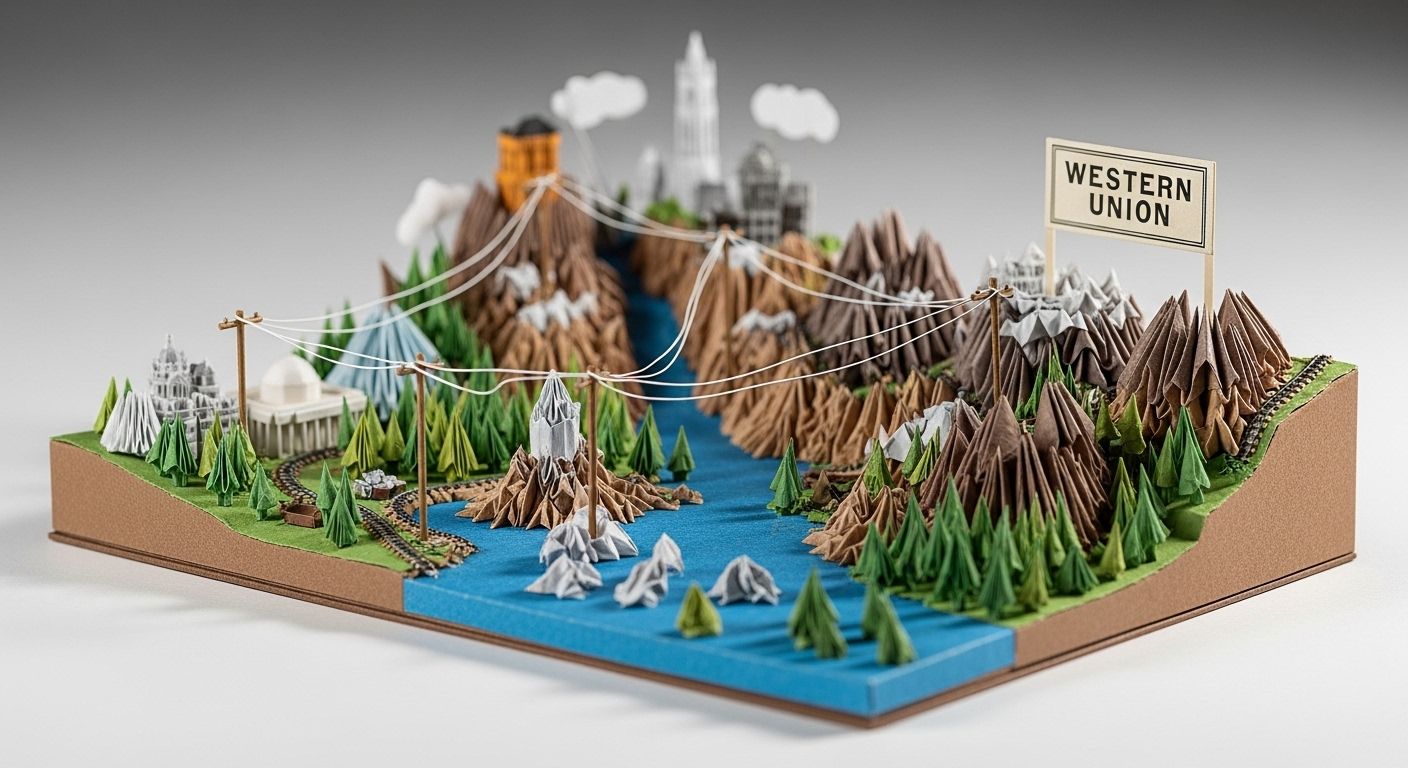
When a Single Message Changed History
On October 24, 1861, something remarkable happened that would reshape human communication forever. Western Union transmitted the first transcontinental telegram across 2,000 miles of rugged American terrain, connecting Washington, D.C. to San Francisco. Before that moment, sending a message coast-to-coast took weeks by stagecoach. After? Mere minutes.
The message travelled from Stephen J. Field, Chief Justice of California, to President Abraham Lincoln. Lincoln's reply echoed Samuel Morse's famous words from 1844: "What hath God wrought?"
That telegram didn't just deliver words. It delivered the right message, to the right person, through the right channel, at precisely the right moment. And it changed everything.
Fast forward 165 years, and marketers face a similar challenge—but with far more complexity. Your customers aren't waiting weeks for messages. They're drowning in them: a crowded inbox, a stream of push notifications, texts, and in-app messages across dozens of apps.
The question isn't whether to communicate with your customers. It's how to cut through the noise and reach them where they actually want to be reached.
That's where omnichannel messaging comes in. And like that first transcontinental telegram, getting it right can change everything for your business.
TL;DR: Omnichannel beats multichannel because the channels talk to each other—if a customer opens your email but doesn't click, your SMS shouldn't repeat the same pitch an hour later, and everything should stop the moment they convert. Email still wins on ROI ($10-$36 back per $1 spent, and up to 45:1 in retail); SMS wins on urgency (98% open rate); push only works once someone has your app installed (46 notifications a day on average, with 81% opt-in on Android versus 51% on iOS). The failure mode isn't picking the wrong channel—it's sending every channel at once. Cap frequency, suppress converters, and orchestrate cascading sequences instead of duplicating the same message everywhere.
What Is Omnichannel Messaging (And Why Does It Matter)?
Omnichannel messaging is a coordinated approach to customer communication that delivers consistent, personalised experiences across every channel—email, SMS, push notifications, in-app messages, and more.
But here's what separates omnichannel from multichannel: integration.
Multichannel marketing means you're present on multiple platforms. Omnichannel marketing means those platforms talk to each other. When a customer opens your email but doesn't click, your SMS doesn't send the same message an hour later. When someone converts after a push notification, your email sequence stops pestering them.
According to Klaviyo's research, omnichannel customers experience "an integrated, cohesive, and personalized journey, regardless of where or when they have touchpoints with your brand."
The payoff is significant. Customer.io case studies show that companies using coordinated multi-channel approaches see:
- 50% increase in active users (ZEN.COM)
- 2x conversion rates year over year (Bamboo)
- 2.5% consistent monthly revenue lift (Lugg)
These aren't vanity metrics. They're revenue.
What Are the Primary Messaging Channels (And What Are They Best For)?
Understanding each channel's strengths helps you deploy them strategically rather than spamming customers everywhere at once.
| Channel | Typical engagement | Cost profile | Best for |
|---|---|---|---|
| 20-45% open rate; $10-$36 ROI per $1 spent (up to 45:1 in retail) | Low, and roughly fixed as your list grows | Long-form content, nurture, transactional messages | |
| SMS | ~98% open rate | Higher cost per message | Time-sensitive alerts, urgency |
| Push | ~46 notifications/day per user; 81% opt-in on Android, 51% on iOS | Free once the app is installed | Real-time nudges, re-engaging app users |
| In-app | No universal benchmark—only reaches people actively using the product | Free to send, but needs engineering to build | Contextual guidance, onboarding, upsell prompts |
Email: The Revenue Workhorse
Email remains the backbone of digital marketing. HubSpot's State of Marketing Report found that 22% of marketers cite email as a top ROI-driving channel. Litmus research puts email ROI between $10-$36 for every $1 spent, with some industries like retail and e-commerce seeing returns as high as 45:1.
Email excels at:
- Long-form content and education
- Newsletters and product updates
- Detailed promotional offers
- Transactional communications (receipts, shipping updates)
- Nurture sequences that build relationships over time
Email limitations:
- Average open rates hover around 20-45%
- Messages can get buried in crowded inboxes
- Slower engagement—people don't check email constantly
SMS: The Attention-Grabber
SMS marketing is experiencing explosive growth. Notifyre reports the US SMS marketing market is growing at a CAGR of 20.3%, expected to reach $12.6 billion. The numbers explain why: SMS boasts a staggering 98% open rate compared to email's 20-45%.
SMS excels at:
- Time-sensitive alerts and flash sales
- Appointment reminders
- Two-factor authentication
- Abandoned cart recovery (immediate urgency)
- Order and delivery updates
SMS limitations:
- Character limits force brevity
- Higher per-message cost than email
- Customers are protective of their phone numbers
- 75% of consumers unsubscribe if they receive too many messages
Push Notifications: The Real-Time Nudge
For companies with mobile apps, push notifications offer direct access to customer attention. Business of Apps reports the average US smartphone user receives 46 push notifications daily, with opt-in rates around 81% on Android and 51% on iOS.
Push notifications excel at:
- Real-time updates and alerts
- Re-engaging dormant app users
- Location-based messaging
- In-the-moment prompts (complete your profile, check out new features)
Push limitations:
- Requires an app installation
- Easy to disable
- Limited content space
- Can feel intrusive if overused
In-App Messages: The Contextual Guide
In-app messages appear while users actively engage with your product. They're contextual, timely, and impossible to miss.
In-app messages excel at:
- Feature announcements and tutorials
- Upsell prompts during key moments
- Feedback collection
- Onboarding guidance
In-app limitations:
- Only reaches active users
- Can interrupt user workflows
- Requires technical implementation
How Do You Know Which Channel to Use? (The Decision Matrix)
Choosing the right channel isn't guesswork. Use this decision matrix to match message type to optimal channel:
| Message Type | Primary Channel | Secondary Channel | Timing |
|---|---|---|---|
| Welcome/Onboarding | In-app | Immediate | |
| Abandoned Cart (0-1 hr) | Push/In-app | - | Immediate |
| Abandoned Cart (1-24 hr) | SMS | Staggered | |
| Flash Sale (<24 hr) | SMS | Push | Immediate |
| Newsletter | - | Scheduled | |
| Order Confirmation | SMS | Immediate | |
| Shipping Update | SMS | Email + Push | Real-time |
| Re-engagement (7+ days) | Push | Morning | |
| Appointment Reminder | SMS | 24hr + 1hr before | |
| Feature Announcement | In-app | On login | |
| Survey/Feedback | In-app | Post-interaction | |
| Account Security | SMS | Immediate | |
| Promotional Offer | SMS (VIP only) | Strategic |
The Three Questions to Ask Before Sending
-
How urgent is this message?
- Immediate action needed → SMS or Push
- Can wait hours/days → Email
-
How much information needs to be conveyed?
- Brief alert → SMS or Push
- Detailed content → Email
-
What's the customer's current context?
- Using your app → In-app message
- Away from your product → Email, SMS, or Push
How Do You Coordinate Channels Without Overwhelming Customers?
Message fatigue is real. When customers feel bombarded, they disengage. They unsubscribe. They develop negative associations with your brand. Here's how to prevent that.
1. Implement Frequency Caps
Set maximum message limits per channel and across channels. Braze's own guidance on frequency capping treats this as a per-customer limit rather than a fixed formula—cap how many messages any one person can receive in a given window (Braze's example: no more than three push notifications a week, or five messages across all channels in a single day), then tighten or loosen the cap based on how that person actually engages.
Update (August 2026): an earlier version of this section attributed a fixed weekly formula to Braze. Braze doesn't publish universal numbers—the figures below are a sensible starting point of our own, not a Braze rule.
A starting point that works for most B2C programmes:
- Per channel: cap marketing email at 3-4 sends a week, SMS at 1-2
- Cross-channel: cap total marketing touches at 5 a week
- Dwell time: leave at least 24 hours between messages on the same channel
In Customer.io, you can build these constraints directly into your workflows using conditional branches that check recent message history before sending.
2. Respect Channel Preferences
Let customers tell you how they want to hear from you. Build a preference centre that allows subscribers to:
- Choose preferred channels (email only, SMS for urgent, etc.)
- Set frequency preferences
- Select content categories they care about
Then honour those preferences religiously. Nothing destroys trust faster than ignoring stated preferences.
3. Use Smart Suppression Logic
Before sending any message, check:
- Did they already convert on this campaign?
- Did they receive a message on another channel in the last X hours?
- Are they actively engaging with your product right now?
- Have they unsubscribed from this type of communication?
These checks prevent the dreaded scenario where a customer buys something and immediately receives three more "complete your purchase!" messages.
4. Orchestrate, Don't Duplicate
The worst omnichannel sin: sending the same message on every channel simultaneously.
Instead, create cascading sequences. For an abandoned cart:
- Hour 0: In-app reminder (if they're still browsing)
- Hour 1: Push notification (if no in-app engagement)
- Hour 4: Email with full product details
- Hour 24: SMS (only if high-value cart and opted in)
Each touchpoint builds on the last. Each respects what came before.
If you're building automated customer journeys, these orchestration rules should be baked into your workflow logic—not afterthoughts.
How Does Customer.io Make Multi-Channel Messaging Seamless?
Customer.io was built for exactly this kind of coordinated messaging. Here's what makes it particularly powerful for omnichannel strategies:
Visual Workflow Builder
Customer.io's drag-and-drop interface lets you build campaigns that span email, SMS, push, in-app, and webhooks—all in a single workflow. You can see exactly how channels interact, where branches occur, and when messages fire.
Multi-Channel in One Journey
Unlike tools that silo channels into separate campaigns, Customer.io lets you:
- Trigger SMS based on email non-opens
- Send push notifications as email fallbacks
- Coordinate timing across all channels in one view
- Use the same customer data and segments everywhere
Real-Time Event Tracking
Every customer action feeds into your messaging logic. Did they open the app? View a product? Abandon checkout? These events trigger the right message on the right channel automatically.
Built-In Frequency Controls
Customer.io's subscription center lets customers manage their preferences, and your workflows can reference those preferences to ensure compliance.
Conversion Goals
Track whether your multi-channel campaigns actually drive results. Set conversion goals at the journey level and measure true incremental impact—not just opens and clicks. For deeper guidance on measuring what works, explore lifecycle marketing reporting and attribution.
What Does an Effective Omnichannel Strategy Look Like in Practice?
Let's walk through three real-world scenarios.
Scenario 1: SaaS Onboarding
Goal: Get new users to their "aha moment" within 7 days
Day 0 (Signup)
- Email: Welcome message with getting-started guide
- In-app: Guided tour on first login
Day 1 (No key action completed)
- Email: Tutorial for completing first key action
- Push: "Pick up where you left off" (if app installed)
Day 3 (Key action completed)
- Email: "You did it! Here's what's next"
- In-app: Celebration message + next steps
Day 3 (Key action NOT completed)
- SMS: "Need help getting started? Reply for support"
- Email: Case study showing value of completing setup
Day 7 (Trial ending)
- Email: Trial expiration reminder with benefits recap
- Push: Countdown notification
- SMS: Last-chance offer (high-intent users only)
This approach mirrors what behaviour-triggered journeys deliver: relevance based on actions, not arbitrary timing.
Scenario 2: E-commerce Abandoned Cart
Goal: Recover 15% of abandoned carts
Hour 0-1
- In-app: Cart reminder (if still on site)
- Push: "You left something behind" (if they left)
Hour 4
- Email: Full cart contents with product images
- Skip if cart recovered
Hour 24
- Email: "Still thinking it over?" with social proof
- Skip if cart recovered
Hour 48 (High-value carts only)
- SMS: Limited-time discount code
- Skip if cart recovered or customer opted out of SMS
Scenario 3: Customer Win-Back
Goal: Re-engage customers who haven't purchased in 90 days
Day 1
- Email: "We miss you" with personalised recommendations
Day 7 (No engagement)
- Push: New arrivals or features they might like
- Email: What's new since they've been gone
Day 14 (Still no engagement)
- Email: Exclusive win-back offer
- SMS: "Here's 20% off to welcome you back" (VIP customers only)
Day 30 (No engagement)
- Email: Final attempt with "we'll give you space" messaging
- Consider moving to sunset segment
What Are the Most Common Omnichannel Mistakes?
Mistake 1: Treating Every Channel the Same
Email content doesn't belong in an SMS. Push notifications aren't mini-emails. Each channel has its own language, length, and expectations. Adapt your message format to match the medium.
Mistake 2: No Central Source of Truth
If your email tool doesn't know what your SMS tool sent, you can't coordinate. Choose a platform that unifies channels—or ensure your tools share data through integrations.
Mistake 3: Over-Messaging High-Value Customers
It's tempting to send more messages to your best customers. Resist. They're valuable precisely because they're engaged. Respect that relationship by not abusing it.
Mistake 4: Ignoring Channel Consent
Just because someone gave you their phone number doesn't mean they consented to SMS marketing. Track consent by channel and respect the difference between transactional and promotional permissions.
Mistake 5: No Suppression for Converters
The fastest way to annoy a customer: keep marketing to them after they've already converted. Build exit conditions into every campaign.
Frequently Asked Questions About Omnichannel Messaging
What is omnichannel messaging?
Omnichannel messaging is a coordinated communication strategy that delivers consistent, personalised customer experiences across multiple channels—email, SMS, push notifications, in-app messages, and more. Unlike multichannel (simply being present on multiple platforms), omnichannel ensures all channels work together, sharing data and respecting each other's communications to create a seamless customer journey.
Why is email still the top ROI channel for marketers?
Email delivers some of the strongest returns of any channel. Litmus's 2025 State of Email survey found 35% of marketers see $10-$36 back for every $1 spent, 30% see $36-$50, and 5% see more than $50. It combines low cost with high reach and flexibility—unlike SMS (which costs per message) or paid ads (which require ongoing spend), email marketing costs remain relatively fixed as your list grows. Email also supports longer content, rich media, and sophisticated personalisation, making it ideal for nurturing relationships over time.
When should I use SMS instead of email?
Use SMS for time-sensitive communications that require immediate attention: flash sales ending in hours, appointment reminders, shipping notifications, two-factor authentication, and abandoned cart recovery within the first few hours. SMS has a 98% open rate and most messages are read within five minutes, making it ideal when urgency matters. Reserve email for detailed content, newsletters, and messages that can wait.
How many marketing messages are too many?
Research shows 75% of consumers unsubscribe if they receive too many messages. A safe starting point: maximum 3 marketing emails per week, 2 SMS per week, and no more than 5 total marketing touches across all channels weekly. However, test with your specific audience—some segments tolerate (and expect) higher frequency, especially during active purchase cycles.
What's the difference between omnichannel and multichannel marketing?
Multichannel means being present on multiple platforms (email, SMS, social, etc.) without necessarily connecting them. Omnichannel means those channels are integrated and coordinated. In a multichannel approach, a customer might receive the same abandoned cart message via email AND SMS simultaneously. In an omnichannel approach, the SMS only sends if the email wasn't opened, and both stop if the customer converts.
How do I prevent message fatigue across channels?
Implement frequency caps (limits per channel and cross-channel), use suppression logic (check for recent messages before sending), respect customer preferences, and orchestrate rather than duplicate messages. Build exit conditions into every campaign so converters stop receiving marketing. Tools like Customer.io let you build these safeguards directly into your workflows.
What channels does Customer.io support for omnichannel messaging?
Customer.io supports email, SMS, push notifications (iOS and Android), in-app messages, webhooks, Slack, and WhatsApp—all manageable within a single visual workflow. This allows you to create sophisticated multi-channel journeys where each channel responds to customer behaviour and previous message engagement.
How do I measure success for omnichannel campaigns?
Look beyond single-channel metrics like open rates. Track journey-level conversion rates, revenue per journey, time-to-conversion across channels, and customer lifetime value. Use holdout groups to measure true incremental impact. Customer.io's conversion goals let you define success at the journey level rather than the message level.
Should I send the same message on multiple channels?
No. Adapt your message to each channel's strengths and constraints. A detailed email with product images becomes a short, urgent SMS. A push notification is even briefer. The core offer or information might be similar, but the presentation should match the medium and the customer's expectations for that channel.
How do I get started with omnichannel if I only have email today?
Start by adding one channel strategically. SMS for time-sensitive messages (abandoned carts, shipping updates) typically delivers fast ROI. Ensure your email platform can coordinate with SMS—or choose a unified platform like Customer.io. Begin with simple orchestration rules (SMS only if email not opened) before building complex multi-branch journeys.
What's the role of customer data in omnichannel messaging?
Customer data is the foundation. You need unified profiles that track behaviour across channels: email opens, SMS responses, app usage, purchase history, and preferences. This data enables personalisation, timing optimisation, and smart suppression. Without centralised data, you're doing multichannel at best—not omnichannel.
How does Customer.io handle channel preferences and consent?
Customer.io's subscription center lets customers manage their channel preferences, and these preferences flow into your workflow logic. You can build branches that check consent status before sending, ensuring you only message customers on channels they've opted into. This protects compliance and customer relationships.
Can I A/B test across channels?
Yes. You can test which channel performs better for specific message types, optimal timing between channels, and whether adding a channel improves or hurts conversion. Customer.io supports A/B testing within journeys, including testing different channel combinations and sequences.
What's the ideal abandoned cart sequence across channels?
A proven sequence: In-app/push reminder within the first hour, email at 4 hours with full cart details and images, follow-up email at 24 hours with social proof, and SMS at 48 hours only for high-value carts and opted-in customers. Always check for conversion before each send and suppress immediately once the cart is recovered.
How do I handle customers who use multiple devices?
This is where identity resolution matters. Customer.io uses identity resolution to match customer profiles across devices, ensuring someone who abandons a cart on mobile and later opens an email on desktop is recognised as the same person. This prevents duplicate messaging and enables true cross-device journey continuity.
The Bottom Line
Omnichannel messaging isn't about being everywhere. It's about being in the right place, at the right time, with the right message.
Just like that first transcontinental telegram in 1861, the power comes from delivering meaningful communication through the optimal channel. Stephen Field didn't send Lincoln a letter. He didn't wait for the next stagecoach. He used the technology that matched the moment's urgency.
Your customers deserve the same consideration. Some messages belong in email. Some demand the immediacy of SMS. Some work best as gentle push notification nudges. The magic happens when these channels work together—sharing data, respecting preferences, and creating experiences that feel personal rather than overwhelming.
The tools exist. Customer.io and platforms like it make multi-channel orchestration accessible to teams of any size. The strategy is clear. All that's left is execution.
Start with your highest-impact journey—probably onboarding or abandoned cart recovery. Add one channel to your existing email flow. Test. Measure. Iterate. Build from there.
The customers who receive coordinated, respectful, channel-appropriate messages will reward you with engagement, loyalty, and revenue. The ones who get bombarded with duplicate messages across every platform will hit unsubscribe.
Which experience are you creating?
About NerveCentral
NerveCentral is a Customer.io Certified Partner specialising in lifecycle marketing that drives real revenue. We help businesses transform Customer.io from "another tool" into a revenue-generating machine through better emails, smarter automations, and campaigns that convert.
Ready to build an omnichannel strategy that actually works? Let's talk.
Sources & Citations
-
Civics for Life. (2024). The First Transcontinental Telegram: A Milestone In Communication
-
HubSpot. (2026). Marketing Statistics, Trends & Data
-
Litmus. (2025). The ROI of Email Marketing
-
Notifyre. (2026). SMS Marketing Statistics 2026: Trends, Insights, and Data
-
Klaviyo. (2026). Omnichannel vs. Multi-channel: Key Differences in Marketing
-
Customer.io. (2025). Best omnichannel messaging campaign ideas for 2026
-
Customer.io. (2025). Features
-
Business of Apps. (2026). Push Notifications Statistics
-
Braze. (2026). What Is Frequency Capping? Managing Message Volume Across Channels
-
Corkboard Concepts. (2026). How Often Should You Text Your Customers to Avoid SMS Fatigue?
-
TopMessage. (2025). Message Fatigue: What It Is and How to Avoid It
-
Email Monday. (2026). Email Marketing ROI Statistics: The Ultimate List
Want this working in your Customer.io workspace?
It's what we do all day for SMBs—strategy, automations, deliverability and hands-on execution.
See how we work as a Customer.io agency →