
Why Chasing New Customers Is Quietly Killing Your Growth
TL;DR: Customer.io's own 2025 research shows acquisition still leads on ROI for 60% of marketers, while only 45% say the same of retention—a gap most businesses are quietly bankrolling with weak lifetime value. Selling to an existing customer succeeds 60–70% of the time versus 5–20% for a new one, and a few points of churn reduction can double LTV outright. Lifecycle marketing closes the gap: it reduces churn, lifts LTV through upsells and cross-sells, and lowers effective CAC by turning retained customers into referrals. Fix retention and your LTV:CAC ratio improves without touching a single acquisition campaign.
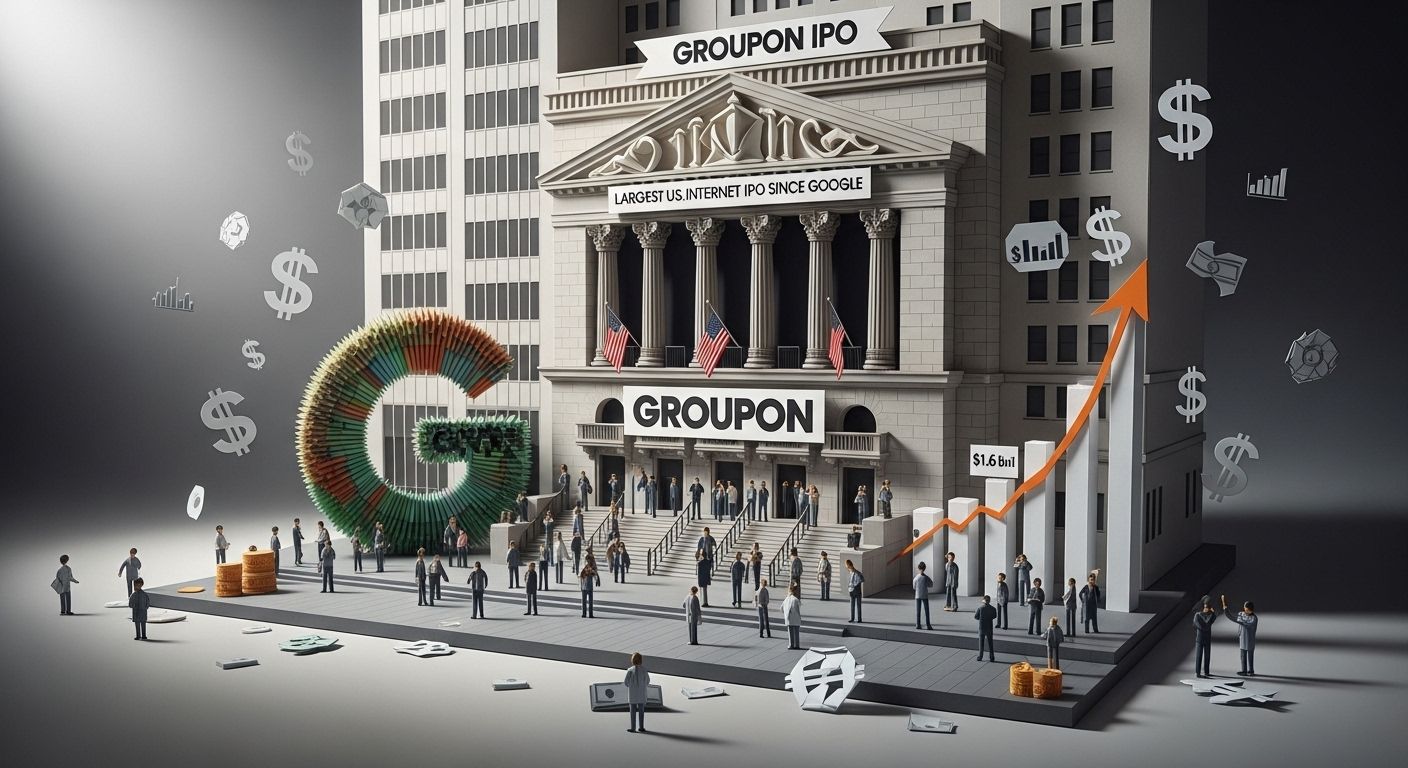
In November 2011, Groupon went public in the largest US internet IPO since Google. The company had grown from zero to $1.6 billion in revenue in just three years—a record no startup had broken. Business press called it the fastest-growing company in history. Investors poured in. Executives celebrated.
Four years later, 80% of that market value was gone.
The reason wasn't competition, bad products, or bad luck. It was a decision baked into the business model from the start: spend everything on getting new customers, and almost nothing on keeping them. Groupon's marketing spend hit 37% of revenue in 2010, its most explosive growth year. It had tens of millions of subscribers and almost no loyalty system to keep them. Merchants reported losing money on deals. Repeat purchase rates were dismal. The customers kept arriving—and leaving just as fast.
Groupon is an extreme case. But the pattern it followed is playing out quietly in thousands of businesses right now.
The Numbers That Should Worry You
Customer.io's State of Lifecycle Marketing Report surveyed over 600 brands across SaaS, fintech, edtech, marketplaces, and healthcare. Its follow-up 2025 Lifecycle Insights research found that acquisition still leads on ROI for 60% of marketers, while only 45% say the same of retention.
That gap is hard to justify once you look at the underlying numbers.
Here's why it matters:
- Selling to an existing customer has a 60–70% success rate. Selling to a new one? 5–20%.
- Bain & Company research shows a 5% increase in retention can lift profits by 25% to 95%.
- In e-commerce, customer acquisition costs have risen over 40% since 2023.
- Retention-focused companies grow 2.5x faster than their acquisition-obsessed competitors.
None of this is new information. So why is retention still losing ground?
Why Acquisition Gets All the Budget (And Retention Suffers)
Acquisition is easy to measure and exciting to report. New logos. New MRR. Growth charts that go up and to the right. Investors and boards love it.
Retention is harder to attribute. When a customer stays, nobody throws a party. When they leave, it shows up as churn—often weeks or months after the damage was done.
There's also a structural problem: most marketing teams are organised around campaigns that generate new customers. The skills, tools, and incentive structures all point toward acquisition. Retention gets treated as customer success's problem, or a nice-to-have automation sequence bolted on after the fact.
The result? Companies keep filling the bucket while ignoring the holes.
What the Imbalance Actually Costs You
Let's make this concrete with numbers.
The Basic LTV Formula
Customer Lifetime Value (LTV) is the total profit you can expect from a single customer over your entire relationship with them.
For SaaS and subscription businesses, the standard formula is:
LTV = (Average Revenue Per User × Gross Margin) ÷ Monthly Churn Rate
Here's how that plays out with two scenarios:
| Metric | Scenario A — acquisition-heavy | Scenario B — retention-focused |
|---|---|---|
| ARPU | $150/month | $150/month |
| Gross margin | 75% | 75% |
| Monthly churn | 5% | 2% |
| LTV | $2,250 | $5,625 |
Same product. Same price. Same margin. The only difference is a 3-point improvement in monthly churn—and LTV more than doubles.
Now apply that across 1,000 customers. The retention-focused business generates $5.6M in lifetime revenue versus $2.25M. That's a $3.35M difference from one metric.
The LTV:CAC Ratio
The industry standard for a healthy business is a 3:1 LTV:CAC ratio—you should earn $3 in lifetime value for every $1 spent acquiring a customer. If your churn is high, you need to either spend less on acquisition or charge more. Both are hard.
Fix retention instead, and your LTV:CAC ratio improves automatically—without changing a single acquisition campaign.
Retention ROI: A Real Example
LES MILLS+, the global online fitness platform, faced surging churn as post-pandemic demand for home workouts fell. Rather than double down on acquisition, they used Customer.io to build a custom churn-prediction model and ran targeted, personalised retention campaigns.
The results: 53% of customers predicted to churn were retained. And 80% of at-risk customers converted to annual memberships—exceeding their six-month churn reduction goal in under two months.
Think about what that means for LTV. A monthly subscriber converted to annual immediately multiplies their projected lifetime value, reduces churn risk, and lowers the effective cost of keeping them.
What Is Lifecycle Marketing—And Why Does It Bridge the Gap?
Lifecycle marketing is the practice of sending the right message to the right customer at the right stage of their journey with your brand. It covers the entire arc from first awareness through activation, retention, expansion, and win-back.
The key word is entire. Most marketing addresses acquisition. Lifecycle marketing addresses everything after the sale—which is where the real money is.
Well-executed lifecycle marketing does three things simultaneously:
- Reduces churn by engaging customers before they disengage
- Increases LTV through upsells, cross-sells, and deeper product adoption
- Lowers effective CAC because retained customers refer new ones
This is why Customer.io is purpose-built for lifecycle marketing. Unlike generic email tools, Customer.io connects real-time behavioural data to automated journeys across email, SMS, push, and in-app messaging. When a customer goes quiet, misses a feature, abandons a booking, or hits a payment failure—Customer.io catches it and responds automatically.
At NerveCentral, we're a Customer.io Certified Partner and we help businesses turn that capability into measurable revenue. Better emails. Smarter automations. Less churn.
How Lifecycle Marketing Actually Works in Practice
Lifecycle marketing isn't one campaign. It's a system of triggered messages that respond to customer behaviour. Here's what each stage looks like:
Acquisition (Yes, Lifecycle Starts Here)
The job at acquisition isn't just conversion—it's acquiring the right customers. Lifecycle marketing helps you segment new leads based on behaviour signals so you're investing in people most likely to become high-LTV customers.
This connects directly to behaviour-triggered journeys, which replace static drip sequences with dynamic responses to what prospects actually do.
Onboarding
The first 30–90 days determine whether a customer sticks around. A well-built onboarding sequence guides new users to their "aha moment"—the point where they experience real value from your product.
Final Round AI used intent-based Customer.io journeys to lift engagement with its interview-prep content by 23% among low-intent visitors and 8% among high-intent visitors, turning passive browsers into activated users. That kind of early engagement lift is exactly what predicts long-term retention.
Retention
This is where most teams drop the ball. Retention marketing should be proactive, not reactive. You want to identify customers at risk of churning before they've decided to leave—and reach them with relevant, personalised messaging.
Expansion
Existing customers are your best upsell opportunity. They already trust you. They've experienced your value. The success rate of selling to them is 60–70% versus 5–20% for new customers.
Lifecycle marketing automates expansion by triggering upsell or cross-sell messages when customers hit usage thresholds or milestones that indicate readiness.
Win-Back
Not every churned customer is gone forever. Win-back campaigns targeting lapsed customers can recover a meaningful percentage at a fraction of the cost of acquiring someone new.
Combined with the omnichannel approach—email, SMS, push working together—win-back sequences reach customers on the channel most likely to get a response.
Lugg's 2.5% Monthly Revenue Lift: What Behavioural Automation Looks Like at Scale
Lugg, an on-demand moving and delivery platform, had Customer.io in their tech stack for six years—but wasn't using it properly. Campaigns were outdated. A/B testing was minimal. Personalisation was almost non-existent.
When Holly Benjamin joined as Head of Marketing, she rebuilt the entire lifecycle programme from scratch using behavioural triggers and Segment integration.
The approach:
- Every product event and user action flowed from Segment into Customer.io
- Campaigns triggered based on actual behaviour—abandoned bookings, payment failures, inactivity
- Email, SMS, and push notifications worked together as a coordinated system
The results:
- 2.5% monthly revenue lift from recovered bookings
- 12–15% conversion rate on booking abandonment flows (peaking above 20%)
- 5% revenue lift from payment failure prevention alone
None of this came from acquiring more customers. It came from better serving the ones Lugg already had—and catching them at the exact moment they needed help.
The Compounding Math: Why Retention Gets Better Over Time
Here's what acquisition-first thinking misses: retention compounds.
A customer who stays for two years instead of one doesn't just double their value—they're also more likely to refer others, expand their usage, and resist competitor offers. The cost to serve them decreases as they become more self-sufficient. They generate reviews, referrals, and case studies.
Acquisition has diminishing returns. Every new customer you acquire costs as much or more than the last one, because you've already captured the easy leads.
Retention has increasing returns. The longer a customer stays, the more profitable they become—and the more they pull other customers in.
This is why lifecycle marketing reporting and attribution matters so much. Until you connect lifecycle campaigns to revenue metrics—LTV, retention rate, expansion MRR—you can't see this compounding effect. And if you can't see it, you can't justify the budget.
Building the Case Internally: How to Shift Budget Toward Retention
Most marketers intuitively know retention deserves more investment. The challenge is making the financial case to stakeholders who want to see growth metrics.
Here's a framework that works:
Step 1: Calculate your current LTV using the formula above. Be honest about your churn rate.
Step 2: Model the impact of a 2-3 point churn reduction. Show what that does to LTV across your customer base. The numbers are usually shocking.
Step 3: Show the cost comparison. What does it cost to acquire a new customer (CAC)? What would it cost to run retention campaigns that achieve the same revenue impact? Retention almost always wins.
Step 4: Point to benchmark data. Bain & Company, Invesp, and Customer.io's own research all back the same conclusion: retention ROI dwarfs acquisition ROI at scale.
Step 5: Start with one flow. Don't ask for a full programme rewrite. Pick one high-impact moment—onboarding drop-off, first churn signal, 90-day milestone—and build one lifecycle campaign. Measure it rigorously and use the results to make the case for more.
The Role of Data: Why Bad Integration Kills Retention Efforts
The number one reason retention strategies fail isn't strategy—it's data. Over 53% of lifecycle marketers say their biggest blocker is disconnected systems.
You can't personalise a retention campaign if you don't know which customers are at risk. You can't trigger a win-back sequence if your CRM doesn't know someone churned. You can't measure LTV if your data is fragmented across five tools.
Customer.io solves this with deep integrations—APIs, webhooks, Segment, Reverse ETL—that bring behavioural data from across your stack into one place.
Once your data is connected, Customer.io Journeys can orchestrate the entire lifecycle automatically—responding to real customer behaviour in real time, at scale.
What a Balanced Strategy Actually Looks Like
The goal isn't to stop acquiring customers. Acquisition is essential—especially for early-stage businesses, new market entries, and high-churn product categories.
The goal is balance. And the benchmark to aim for is roughly equal investment across the full lifecycle: meaningful spend on acquisition, equally meaningful investment in the activation, retention, and expansion stages that determine whether that acquisition was worth anything.
Here's a rough allocation for a mature SaaS or subscription business:
| Lifecycle Stage | Suggested Budget Weight |
|---|---|
| Acquisition | 35–40% |
| Onboarding & Activation | 20–25% |
| Retention & Engagement | 25–30% |
| Expansion & Upsell | 10–15% |
| Win-back | 5–10% |
This isn't a formula—it varies by business model, churn rate, and growth stage. But the principle is clear: if 60% of your marketing effort goes toward acquisition and almost nothing goes toward what happens after, your growth is built on sand.
Frequently Asked Questions
What is the difference between customer acquisition and customer retention?
Customer acquisition is the process of attracting and converting new customers. Customer retention is the ongoing effort to keep existing customers engaged, satisfied, and continuing to buy. Acquisition drives top-line growth. Retention drives profitability, LTV, and sustainable revenue. Most businesses need both—but most under-invest heavily in retention.
Why do so many businesses prioritise acquisition over retention?
Acquisition produces visible, easy-to-attribute metrics: new signups, new MRR, new logos. Retention is harder to measure and less exciting to report. Organisational incentives—quotas, KPIs, board expectations—typically reward acquisition. Retention is often siloed in customer success rather than owned by marketing.
How much does it actually cost to acquire a new customer versus retaining one?
Acquiring a new customer costs 5–25x more than retaining an existing one. In SaaS, average CAC can exceed $700 per customer. Retention costs—email automation, lifecycle campaigns, customer success touches—are typically a fraction of that.
What is customer lifetime value (LTV) and how do I calculate it?
LTV is the total profit you expect from a customer over your entire relationship. The standard SaaS formula is: (ARPU × Gross Margin) ÷ Monthly Churn Rate. For example, a $100/month customer with 80% gross margin and 3% monthly churn has an LTV of roughly $2,667. Improving churn from 3% to 2% raises that to $4,000—a 50% increase in value from the same customer.
What is lifecycle marketing?
Lifecycle marketing is a strategy that sends targeted, relevant messages to customers based on where they are in their relationship with your brand—from first awareness through onboarding, retention, expansion, and win-back. It uses behavioural data and automation to deliver the right message at the right moment, rather than sending the same campaign to everyone.
How does Customer.io support lifecycle marketing?
Customer.io is a messaging automation platform that connects behavioural event data to multi-channel journeys across email, SMS, push, and in-app messaging. It lets you trigger campaigns based on real customer actions—not just demographics or time delays. It's purpose-built for the kind of behaviour-driven lifecycle marketing that reduces churn and grows LTV.
What is a healthy LTV:CAC ratio?
The widely accepted benchmark is 3:1—you should earn $3 in lifetime value for every $1 spent acquiring a customer. Below 3:1 and your unit economics are unsustainable. Above 5:1 can indicate you're under-investing in acquisition and leaving growth on the table. Improving retention is one of the most direct ways to raise your LTV:CAC ratio without changing your acquisition spend.
What are the most effective retention marketing channels?
According to Customer.io's 2025 Lifecycle Insights research, 83% of teams cite email as their proven ROI channel for retention. SMS works well for time-sensitive moments. Push notifications are effective for re-engagement. In-app messaging drives feature adoption. The most effective retention programmes use all four in coordinated sequences—not as isolated campaigns.
How do I measure retention ROI?
Retention ROI is best measured through three metrics: (1) churn rate reduction—how much has your monthly/annual churn fallen; (2) LTV improvement—has average customer lifetime value increased; (3) expansion revenue—are existing customers spending more over time. Lifecycle marketing reporting tools connect these metrics to specific campaigns so you can attribute revenue impact accurately.
What is churn rate and why does it matter for growth?
Churn rate is the percentage of customers who stop doing business with you in a given period. Even a 2% monthly churn means you lose roughly 22% of your customers each year. That means you must replace nearly a quarter of your base just to stay flat—before you grow at all. High churn makes acquisition a treadmill: you run faster and faster just to stay in place.
What is the "leaky bucket" problem in marketing?
The leaky bucket is a metaphor for a business that acquires customers at the top while they drain out the bottom through churn. No matter how much you pour in, the bucket never fills. Fixing the holes—through better onboarding, retention flows, and win-back campaigns—is almost always more cost-effective than pouring faster.
What is the difference between a drip campaign and a lifecycle marketing campaign?
A drip campaign sends pre-written emails on a fixed time schedule (e.g., "email 1 on day 1, email 2 on day 3"). A lifecycle campaign triggers based on actual customer behaviour. If a customer completes onboarding faster than expected, a lifecycle system adapts. If they go quiet, it notices and responds. Behaviour-triggered journeys are significantly more effective because they respond to what customers actually do.
How do I get started with lifecycle marketing using Customer.io?
Start with one high-impact flow. Good candidates: an onboarding sequence for new signups, a re-engagement campaign for users who've gone quiet, or a churn-prevention flow for customers approaching their renewal date. Connect your behavioural data using Segment or direct API integration, map the trigger events, and build the journey in Customer.io. Measure the result. Then expand. NerveCentral can help you build and optimise the entire system—reach out to find out how.
What lifecycle stage is most neglected by marketers?
Retention. Customer.io's 2025 Lifecycle Insights research found acquisition still leads on ROI for 60% of marketers, while only 45% say the same of retention—even as churn becomes a more critical business problem and acquisition costs continue to rise. Win-back is also heavily underinvested, despite the fact that lapsed customers often convert at significantly better rates than cold prospects.
Can a small team implement lifecycle marketing effectively?
Yes. Modern lifecycle platforms like Customer.io handle the complexity of segmentation, triggering, and channel orchestration. A small team can build highly effective automated journeys that run without manual intervention. The upfront investment is in strategy and setup—once running, a well-built lifecycle programme generates compounding returns with minimal ongoing effort.
The Bottom Line
Groupon's collapse wasn't caused by one bad quarter or one bad hire. It was caused by a strategy that treated every customer as a one-time transaction and never built the infrastructure to make them stay.
The 60/45 split in today's marketing priorities suggests that too many businesses are making the same bet.
Lifecycle marketing is the fix. Not because it replaces acquisition—it doesn't. But because it makes every acquired customer worth dramatically more. It turns a leaky bucket into a compounding growth engine. And with the right platform behind it, it runs at scale without a huge team.
Customer.io is that platform. NerveCentral is the team that makes it work.
Sources
- Customer.io — State of Lifecycle Marketing Report — Survey of 600+ brands on lifecycle stage priorities.
- Customer.io — 2025 Lifecycle Insights — Follow-up research confirming acquisition leads on ROI for 60% of marketers versus 45% for retention, and email as the 83% ROI-anchor channel.
- Bain & Company — Retaining Customers Is the Real Challenge — Source of the 5% retention → profit increase finding.
- Invesp — Customer Acquisition vs Retention Costs — Cost-ratio statistics, including the 5–25x acquisition cost multiple (via Harvard Business Review).
- Innovation Visual — Customer Retention: The Essential Growth Strategy for 2025 — E-commerce CAC increase data (40%+ since 2023).
- Customer.io — How LES MILLS+ Transformed Customer Retention — Case study: 53% churn prevention, 80% annual conversion.
- Customer.io — How Lugg Drives 2.5% Revenue Lift with Lifecycle Campaigns — Case study: behavioural automation, booking recovery, revenue lift data.
- Customer.io — Final Round AI Drives Smarter User Activation — Case study: intent-based journeys lifting engagement 23% (low-intent) and 8% (high-intent visitors).
- Artisan Growth Strategies — Customer Acquisition vs Retention Costs — 60–70% vs 5–20% success rates, 2.5x faster growth for retention-focused companies, 3:1 LTV:CAC benchmark.
- Business Insider — Lessons From Groupon's Business Model (2013) — Confirms Groupon's November 2011 IPO was the largest US internet IPO since Google (2004).
- TechCrunch — Groupon Ends The Year With $1.6 Billion In Revenues, Up 419 Percent — Confirms Groupon's FY2011 revenue figure.
- Chicago Magazine — The Groupon IPO: Burn Rates and Bubbles — Confirms Groupon's marketing spend reached 36.8% of revenue in 2010, its peak growth year.
- StockAnalysis.com — Groupon (GRPN) Market Cap & Net Worth — Confirms Groupon's market cap fell from $16.5B at IPO (Nov 2011) to under $2B within four years.
- Customer.io — 2025 Lifecycle Marketing Challenges — 53% of marketers cite disconnected data as their #1 blocker.
Want this working in your Customer.io workspace?
It's what we do all day for SMBs—strategy, automations, deliverability and hands-on execution.
See how we work as a Customer.io agency →